
Adaptive Reuse: Breathing New Life into Ireland’s Existing Buildings
Across Ireland, many existing buildings are being looked at anew – not simply as structures that have outlived their original purpose, but as opportunities to support the city’s next phase of growth. At MDO, our highly experienced commercial and hospitality teams are leading this charge through projects such as The Clarence and The Dean Hotel.
Posted on 13 May 2026
Adaptive reuse has become an increasingly important approach that allows buildings to evolve rather than be replaced and enables development that is both sustainable and contextually grounded.
At its core, adaptive reuse involves rethinking what is already there. Instead of demolishing and rebuilding, existing structures are retained and carefully adapted to suit new uses. While internal layouts and building services may change significantly, much of the original fabric can often be reused.
This approach can reduce construction time and cost, minimise waste, and substantially lower embodied carbon. In a city facing increasing pressure on land and resources, reuse offers a practical and responsible alternative to new build development.
Why Adaptive Reuse Matters in Ireland Today
Ireland’s urban conditions make adaptive reuse particularly relevant. Limited availability of city-centre sites has sharpened the focus on how existing buildings are used, while national climate commitments continue to push the construction industry towards lower-carbon solutions.
Planning policy increasingly supports conservation-led development, recognising that reuse can protect heritage while contributing to active, viable streets and neighbourhoods.
Bringing vacant or underperforming buildings back into use also has a broader civic impact. It helps re-energise streets, supports local economies, and strengthens the sense of continuity that makes places feel established rather than disposable. No. 35 Harcourt St. was vacant, and therefore contributing little to the life of the street. The Client’s purchase and subsequent refurbishment of this incorporated it into The Dean Hotel, giving the building, and in turn the street, new life.
The Realities and Challenges
Adaptive reuse is rarely straightforward. Existing buildings often carry hidden issues – structural movement, water ingress, or fabric deterioration – that can only come fully to light once investigations begin.
Introducing modern building services into historic structures requires careful coordination, particularly where interventions must remain visually discreet.
Meeting current standards for fire safety, accessibility, acoustics and thermal performance can be challenging within the constraints of older construction methods. Where buildings are protected structures, conservation requirements shape every decision, demanding a careful balance between preservation and change. However, these challenges can be dealt with successfully in various proven ways.
The Value of Reuse: Sustainability, Identity and Longevity
Despite the challenges, adaptive reuse delivers clear commercial and strategic advantages. Retaining existing structures can significantly reduce embodied carbon, supporting sustainability targets while also shortening programme timelines and limiting demolition-related cost and risk.
Just as importantly, reuse creates developments with a strong sense of identity - an increasingly valuable differentiator in a competitive market. Existing buildings bring scale, texture and authenticity that are difficult to replicate in new build schemes, helping projects stand out and attract long-term occupiers. From a commercial perspective, adaptive reuse frequently unlocks hidden value in underperforming assets, delivering distinctive, high-quality space that performs well over time and strengthens overall investment resilience.
At The Clarence Hotel, the site encompasses four separate buildings, two of which are protected, and it is proposed to retain c. 90% of the existing fabric. The Clarence Hotel, Dollard House and 1 Essex St. East are being retained and extended vertically, whilst it is proposed to demolish the later single storey Anne’s Bar in lieu of a 7 storey contemporary infill structure.
Adaptive Reuse in Practice: The Clarence Hotel and Dollard House, Wellington Quay
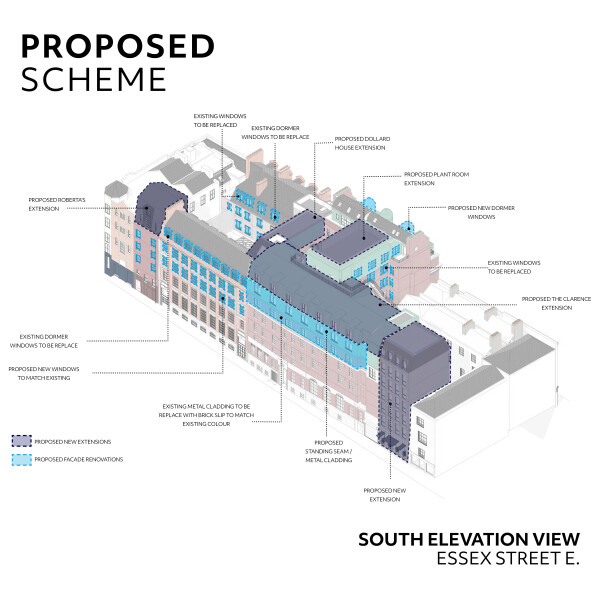
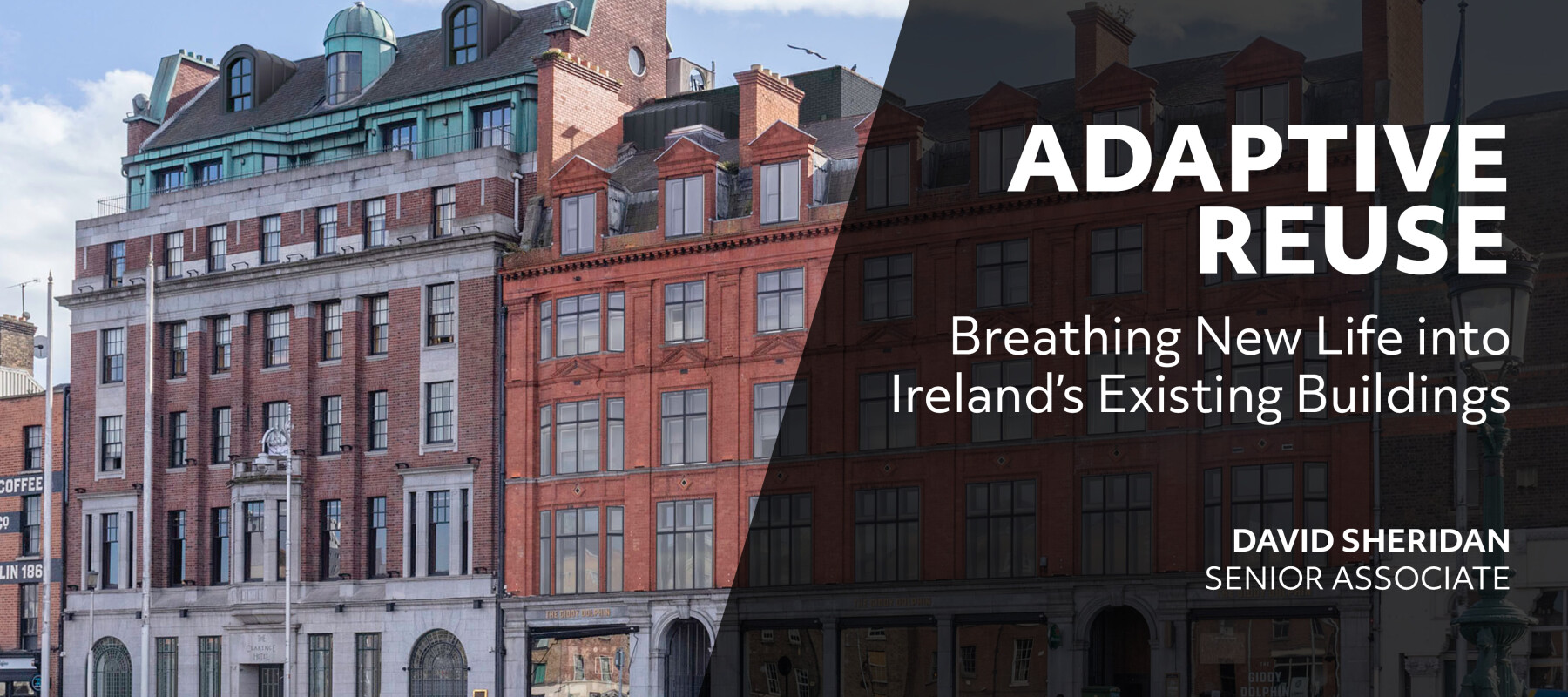
A similar approach guided the adaptive reuse of the Clarence Hotel and the adjoining Dollard House on Wellington Quay and Essex Street East. Long-vacant upper floors had fallen into poor condition, threatening the long-term health of the buildings. The project sought to bring these spaces back into use as hotel accommodation, securing the future of a key city-centre landmark while unlocking previously underperforming floor area in a prime location.
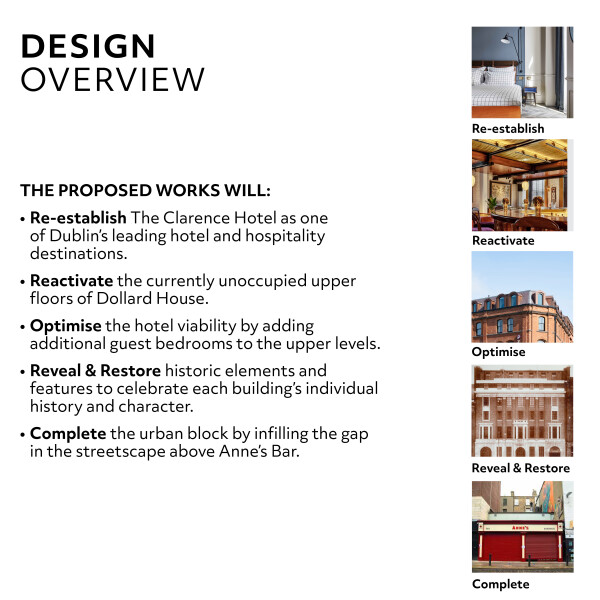
A heritage-led strategy retained the original structure, roof form and significant architectural features. Later, unsympathetic alterations were removed to reveal historic windows, finishes and spatial qualities. New internal connections improved circulation and fire safety, while targeted structural repairs ensured long-term stability and supported the efficient reoccupation of the building.
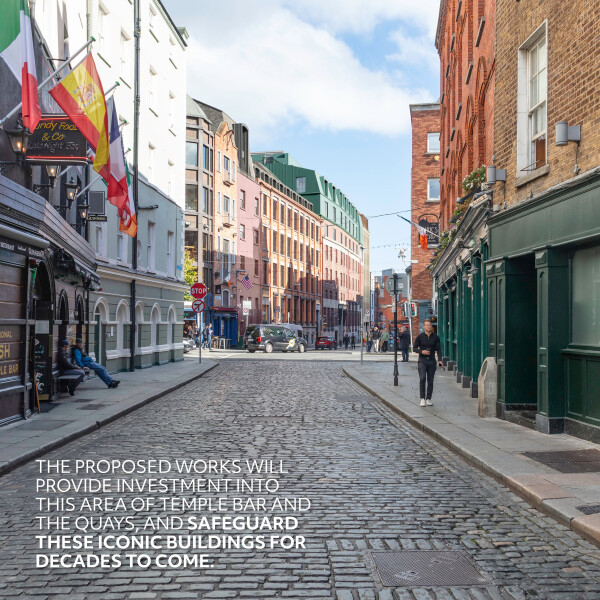
Ongoing engagement with Dublin City Council ensured the project met conservation, fire and accessibility requirements, providing clarity and certainty through the planning and delivery process. By reactivating previously vacant floors, the development aligned closely with city policies encouraging reuse and consolidation within the historic core, while delivering high-quality accommodation that strengthens the hotel’s commercial performance and long-term asset value.
Adaptive Reuse in Practice: The Dean Hotel, No. 35 Harcourt Street
The redevelopment of No. 35 Harcourt Street demonstrates the commercial potential of well-considered adaptive reuse. Once vacant and underperforming, this four-storey townhouse was successfully integrated into the Dean Hotel, delivering 20 additional guest bedrooms and new restaurant space in a prime city-centre location.
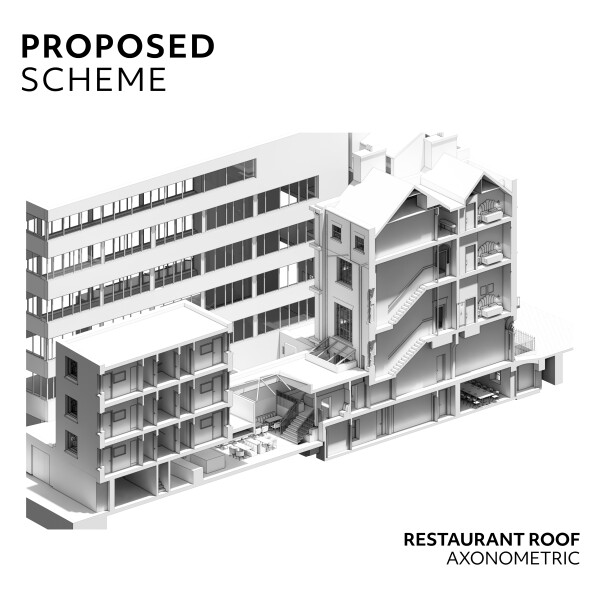
By working with the existing building, the project unlocked valuable floor area within a constrained urban site, allowing the hotel to expand efficiently without the time, cost and risk associated with full demolition and new build. Internal layouts were reconfigured to meet modern hospitality standards, while targeted interventions enhanced functionality and operational performance.
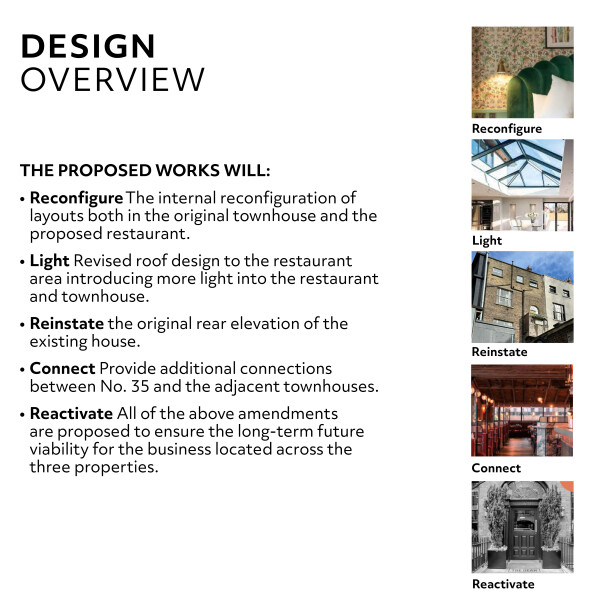
Delivered through close engagement with planning and building control authorities, the project achieved full compliance while maintaining programme certainty. Retaining the existing structure significantly reduced demolition waste and embodied carbon, aligning the development with sustainability objectives while delivering a distinctive, revenue-generating asset. The completed scheme strengthens the hotel’s market offering and demonstrates how adaptive reuse can combine commercial return with long-term value.
Looking Ahead
As Dublin continues to grow, adaptive reuse will play a central role in unlocking development potential within the existing city. It offers a smart response to limited land availability, evolving market demand and increasingly ambitious sustainability targets — allowing high-value development to be delivered within established urban locations. MDO will continue to play an active role in realising this potential, working with clients to maximise the value of existing assets.
Adaptive reuse is not about preservation for its own sake; it is a commercially focused design strategy that balances sustainability with performance and return.
By reimagining existing buildings, developers can deliver distinctive, market-ready space more efficiently, while strengthening the long-term appeal and resilience of their investments. In this way, Irish cities and towns can continue to evolve without sacrificing the character that underpins its success.
About the author
David Sheridan brings strong experience in delivering retrofit-focused commercial projects, guiding schemes from inception through to completion. He has developed a deep understanding of statutory processes, including Planning and Building Regulations, and is particularly adept at navigating the complexities that come with upgrading existing buildings. David combines international experience with a practical, solutions-driven approach. He plays a key role across MDO’s retrofit and refurbishment portfolio, working collaboratively in high-pressure environments to deliver effective outcomes for clients and stakeholders.
Planning a retrofit? Speak with one of our experts to map out your next steps: info@mdo.ie